The Master Gardener program began in the 1970's in response to the many gardening questions that resulted from the rapidly increasing level of interest in home gardening. The idea was to train knowledgeable gardener volunteers to help University Extension staff deliver home gardening information to the public.

Our local Master Gardeners are able to build on their interests and acquire greater expertise through the resources available through the Extension Service and the University of Missouri.

University of Missouri Extension provides equal opportunity to all participants in extension programs and activities, and for all employees and applicants for employment on the basis of their demonstrated ability and competence without discrimination on the basis of their race, color, religion, sex, sexual orientation, national origin, age, disability or status as a protected veteran.

Hickory County Master Gardeners recommend contacting your local Extension Service for more complete plant and growing information and how to become a Master Gardener.

Meetings are reserved for Master Gardener members, but community programs hosted by the Master Gardeners are public events and will be announced in the local newspaper.

As of 12/31/2014, this blog will no longer post new articles. It will remain active as an archive. Please use the tools available in the right column to search for information and source links provided in previous articles.

FOR MORE INFORMATION: http://extension.missouri.edu/ and http://mg.missouri.edu/.


Showing posts with label Events Calendar. Show all posts

2014 HCMG Fundraising Dinner

The Annual Hickory County Master Gardeners' Fundraiser Dinner was held Sunday, October 19th at the McCarty Senior Center in Wheatland, Missouri.  This is one of two events held each year to raise funds to support 14 Service Projects throughout Hickory County.  The 40+ trained volunteers put in a total of at least 1000 hours to promote the University of Missouri Extension's program to "help others learn to grow" and the beautification of public areas with plants, as well as grow vegetables to be used in the community senior center and Meals on Wheels program for qualified individuals.  The other main fundraising project is the Annual Plant Sale where Master Gardeners grow plants in the Greenhouse to sell to the public each spring.

The Service Projects in 2014 are:

1.    Galmey VFW
2.    Greenhouse
3.    Hermitage Community Building
4.    Hermitage Courthouse
5.    Hermitage Library
6.    Hermitage Hornet Garden
7.    Hermitage Welcome Signs
8.    McCarty Donation Gardens
9.    McCarty Senior Center Landscaping
10.  Pittsburg Community Building
11.  Preston Post Office
12.  Wheatland Settler's Village
13.  Weaubleau Memorial Garden
14.  Gardeners Companion Blog


Succulent Pumpkin Planters on a Quilt Square were creatively made by our Master Gardeners and used as centerpieces on all the tables.  The person at each table whose birthday was closest to the day got to take one home.

The annual event was well attended by the community from 11 a.m. to 1 p.m.

Hickory County Master Gardeners worked all year on a quilt which included selling raffle tickets.  Last chance to buy a ticket was at the front door where dinner tickets were sold. The dinner ticket was also good for entry to win one of several nice door prizes. This year's crafted quilt was machine quilted 86"x96" 100% cotton fabric by Moda in a pattern appropriately called "Garden Party."

Hickory County Master Gardeners are known for their delicious home baked desserts and there was a wonderful selection again this year!


Dinner was prepared and served by Chef Mark of the McCarty Senior Center featuring fried chicken, baked ham, scalloped potatoes, green beans, coleslaw, rolls and salad.  Chef Mark receives the large quantities of vegetables produced each year from the Master Gardeners' Donation Garden located just outside the kitchen back door.


There was a Silent Auction table that contained items donated by the Master Gardeners.


Master Gardeners also donated items for Door Prizes.


The winner of the Garden Party quilt raffle was Doris Hutton.

Hickory County Master Gardeners that volunteered their services for the annual dinner would like to give a big THANK YOU for all the support from the community in 2014!  Hope to see you all again next year!
Posted:  10/26/2014

Fall Gardening Workshop in Kimberling City, MO


This workshop was put on by the Master Gardeners of the Ozarks through the Taney and Stone County University of Missouri Extension.   It is the 11th Annual Fall Gardening Workshop and was well attended at the Shepard of the Hills Lutheran Church in Kimberling City, Missouri.  The level of professionalism and dedication of the members of this Master Gardeners group is something other University of Missouri Master Gardener groups could aspire too.  My husband and I as well as several other Hickory County Master Gardeners know all too well that when we get notice of events in this area, we will not be disappointed for making the long drive.

Included in the $18 registration was a large variety of foods for a Continental Breakfast before the program which began at 8:30.  Lunch was a lovely fresh salad, a pasta/chicken entree, fresh rolls and two cake choices.  Of course, there were door prizes from nine different sponsors!  There were a large number of plants and garden-related items that could be purchased.
The vendors that set up in the room included:

Art that Rocks - Marty Schmitt from Reeds Spring
Cedarbrook Garden Center - Melissa Pack from Branson West
The Flower Farm - Linda Lauer from Hollister
Hilltop Farm - Oscar and Amy Cross from Ash Grove

There were four topics:  Death by Chlorophyll, Straw Bale Gardening, Organic Weed Control, and Bulbs for Fall Planting.

Death by Chlorophyll 
Oscar Cross from Hilltop Gardens from Ash Grove presented his topic in a humorous twist on an otherwise deadly subject.  He provided full color handouts on 32 different plants talking about how they all can have an interesting place in our gardens but warned "Don't eat them!" along with what would happen if they were consumed.  Many were obvious such as poison ivy, dieffenbachia, Jimson weed, some mushrooms, castor beans, morning glories and poppies.  In some phases of growth, some less known as dangerous plants can make you sick or worse, such as celery, mango, cashew, peace lily, rhubarb, hyacinth, tulip, daffodil, and raw kidney beans.

Straw Bale Gardening
Mark and Renae Bernskoetter are Master Gardeners from Springfield who presented another less known option to garden when the ground is not suitable because of soil conditions or too many rocks.  The slide show had a variety of ways to set up raised gardens using up to eight bales with and without composted soil.  Keeping the banded side outward, a small portion of the straw is removed to place a plant on top or the bales can be arranged so that composted soil and the plants are in between.  As the bales break down, more bales will be added each year and eventually a nice composted raised garden area is produced naturally.  The challenges are mostly with extra watering and fertilizer that would be needed compared to non-raised beds.


Organic Weed Control
Kelly McGowan, Horticulture Educator, University of Missouri Extension/Friends of the Garden, Springfield, had a detailed power point presentation that included weed biology and management choices.  Most of the "organic" methods were obvious such as prevention, using flame weeding, drip irrigation, grazing animals, weed suppressive cover crops, soil solarization (cover area with plastic), and  mulching.  Organic Herbicides containing acetic acid (vinegar) and citric acid along with corn gluten meal as a pre-emergent were the only options provided.  She also said that the University of Missouri Extension continues to study, but can not recommend, the old standby recipe of vinegar, salt, and dish detergent so many of us organic gardeners have been using for years with some success.


Bulbs for Fall Planting
Patrick Byers, Horticulture Specialist, University of Missouri Extension, Springfield, presented detailed information about all kinds of bulbs and bulb-like plants.


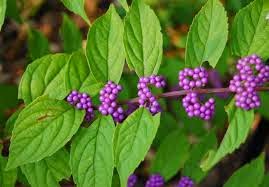
Not only did I come away from this workshop more knowledgeable but also inspired to use the information throughout my gardens, when needed.  I also won the "Table Prize" because my birthday was the closest to the current date and I walked out with a huge Bleeding Heart perennial that was our table decoration!  As we were leaving I noticed one of our table members had purchased an American Beauty Berry Bush from one of the vendors during one of the breaks.  It was something I had been wanting for a couple years and was happy to find that the vendor had one left and for only $10!  So after a couple hours drive back home, my husband and I found new happy places for our new plant family members.  So now every Fall I will think about this wonderful workshop when I enjoy the bright purple berries of my American Beauty Berry Bush!

American Beauty Berry - Early Amethyst - Callicarpa dichotomy


Sources:  Beti Pearson, Hickory County Master Gardener and Missouri Master Naturalist and
                Master Gardeners of the Ozarks and MU Extension

Posted: 10/11/2014


Floral Workshop and Annual Picnic

Creativity and Camaraderie 

Hickory County Master Gardeners got together for a couple events this week for members and their guests.  A floral workshop was informative and allowed member's creativity for floral arrangements guided by the owner of Gynemia's Floral and Gift located on Hwy 54 in Wheatland, Missouri.  The workshop took place at the Hickory County Extension Office in Hermitage, Missouri.

Members brought a variety of containers from home and in a short time they were turned into beautiful floral arrangements.  Of course, there's always delicious snacks and drinks available and time to share conversations with fellow members.


The Annual Picnic this year took place at the picnic area located next the to the Army Corp of Engineers Office building located at the Pomme de Terre Dam.  It is a wonderful scenic view overlooking both the lake and the outlet area.  As in the previous year, the picnic was combined with the Hickory County University of Missouri Extension Council members and Hickory County Master Gardener members and their families.

The food table was extensively loaded with all kinds of homemade goodies provided by the Master Gardeners.  The Extension Board members provided ham and also grilled hotdogs as well as all the service and drinks.  Both groups gathered briefly for their monthly meetings.  Awards were presented to two Hickory County Century Farm families.  It was a good time to renew friendships and see all the active people behind the scenes of The University of Missouri Extension
Council in Hickory County .


     New M.U. Extension Agronomy Specialist for Hickory County,
Terry Halleran, from Stratford, MO

Source:  Beti Pearson, Hickory County Master Gardener and Missouri Master Naturalist
Posted: 10/3/2014

Summer Garden Tour

Celebrate Summer Garden Tour 2014

What better way to celebrate the first day of summer than to spend the day on  a Garden Tour?  A full day of education was put on by The Masters Gardeners of the Ozarks from Taney and Stone Counties in SW Missouri.  This year was a "go on your own" tour that covered three stops beginning in Kimberling City, then a private garden in Blue Eye, lunch and tour at Persimmon Hill Berry Farm, Big Cedar Lodge and ending at College of the Ozarks. 

Registration was at the Senior Center in Kimberling City where we got our packet and map.  We had registered online previously and paid the fee of $22 each so we were ready to go after after some early morning refreshments provided at 8:00 a.m. after check-in and information packets provided. We walked around the building and saw the Master Gardener approved gardens that the chapter designed and maintained. There were 23 perennials/shrubs/trees and eight annuals around the Senior Center.  Lovely!


KAL Children's Garden
The next stop on our tour was a short distance to the Library where there was a KAL Children's Garden.  The Mission of the KAL Garden is to provide a garden environment in which plant based and reading activities generates interest and appreciation of reading and horticulture that lead to a lifelong pursuit of these beneficial activities.  The plant list is extensive.   There are eight trees/shrubs, 23 flowers in the ABC Garden, and 28 other annuals and perennials.  Volunteers for the library installed irrigation and the garden is currently funded with grants from the Master Gardeners of the Ozarks and the Kimberling City Area Library Association.  


The last stop in Kimberling City was at the Kimberling City Center - a shopping mall with about two dozen businesses.  One was the Table Rock Art Gallery www.tablerockartguild.com where there was an Art Walk on this day.   This day was also the dedication and demonstration of a new Storm Water Management Project.  The previously paved parking lot was redesigned.  This 3-acre lot will now capture an estimated 8 pounds of nitrogen, 1.5 pounds of phosphorus, 4 pounds of metals (iron, copper, lead) and 125 pounds of soil and minerals per year off cars and trucks.

While the nutrients, nitrogen, and phosphorus do not sound like a lot of pollution, keep in mind that it only takes one pound of phosphorus to enable the growth of 700 pounds of algae in the water!  Metals such as lead can also concentrate in fish which is a bad thing for people that like to eat what they catch. Table Rock Lake is within view of this shopping center and is known as one of the best for bass fishing.


Linda Redford's farm in Blue Eye

Linda Redford and her century-old restored farmhouse in Blue Eye
Crossing the bridge over Table Rock Lake, we drive to Blue Eye.  Linda Redford currently has what many people said is the most beautiful garden in the area.  Her house is more than a century old and she promised her family she would not sell.  She has restored the house and revived the gardens she grew up with.  Her father was also a fishing guide in the area and Linda is a member of Women's Professional Bass Tours and travels for tournaments all over the country.  Gardening and fishing are her life!


Grading freshly-picked blueberries at Persimmon Hill Farm
Time now for lunch!  Persimmon Hill Farm is a real berry, fruit and mushroom farm that began several decades ago.  The current owners started in 1982 turning two acres into blueberry fields with hives of honeybees for pollination.  They added fields of blackberries, raspberries, gooseberries, plums and more.  Their goal was to provide top quality berries and an enjoyable family experience where Branson Area tourists could pick their own fruit.  The addition of log-grown shiitake mushrooms began a new gourmet product line.  Other products developed and available for sale include barbecue sauces, jams/jellies and mushroom sauces, with a total of 30 gourmet food products.  They ship gourmet food items and baskets all over the world.  www.persimmonhill.com

View of Table Rock Lake from Big Cedar Lodge

Oak Leaf Hydrangea in full bloom!

Beautiful rock work in landscaping at Big Cedar Lodge
Big Cedar Lodge is proud of their environmental efforts that enhance the natural beauty that surrounds the area.  Their motto is "Take care of the soil, don't worry about the plants."  To create and nurture rich soil in which they grow their gardens, they compost with their vast supply of horse manure, any plant/grass clippings and a plentiful supply of vegetable and fruit waste from the kitchens.  They also fertilize with organic fertilizer in the spring and fall.   They provided a small booklet of Gardening Tips from Big Cedar along with descriptions/photos of many of their plants in the landscape.  www.bigcedar.com

"Your sacred plants, if here below,
Only among the plants will grow.
Society is all but rude,
To this delicious solitude."  
~ Andrew Marvell

"Remember, we all live downstream."


Edwards Mill at College of the Ozarks
Master Gardeners greet tour participants by the mill and greenhouses/gardens at College of the Ozarks


College of the Ozarks is a college where no tuition is charged because all students work on campus; debt is openly discouraged.  This "Hard Work U" has long been supported by the Master Gardeners of the Ozarks with a portion of the proceeds from this tour to be awarded as a full scholarship to a College of the Ozarks student whose study is plant-based.  A CD is provided for a walking/driving tour of the campus.  The annual flower beds, greenhouses and 32 fruit/vegetable plots are of most interest.  There is also a working mill.  These gardens supply produce for the on site Farmer's Market that began in 2013, Dobson Dining Room in the Keeter Center and for the Pearl Rogers Student Dining Room.  There is also a dairy that produces and sells unpasteurized milk.  Other products include meats, bedding plants, hanging baskets, Edward's Mill products, Fruitcake and Jelly Kitchen items, stained glass and goodies for the student's Keeter Center.  Most of the campus is self-sustaining which includes producing their own water, sewer treatment plant, steam heat, water cooling systems and more.  www.cofo.edu


Greenhouses


Hydrophonic system to grow vegetables


Water-cooling system


Orchid Greenhouse


Vegetable Gardens 
Garden Tour information is made available to all Master Gardeners through the various chapters around the state each year.  There are many opportunities that qualify for continued education and also for advanced training.  Yearly continuing education is required to maintain an active status as Master Gardener in addition to 20 hours of volunteer service (30 hours for the first year).  This tour qualifies for the required six hours of continued education.  What a fun opportunity to learn!


Source:  Beti Pearson, Master Gardener and Master Naturalist

Posted: 7/18/2014


Historic Kitchen Gardens

Historic Daniel Boone Home & Heritage Center, Lindenwood University, Defiance, Missouri  

Accounts of the early 1800's remarked that the gardens contained a variety of vegetables that were cultivated in raised beds, intermingled with herbs, flowers, and shrubs, located next to small orchards containing a variety of the choicest fruits.  They complimented each other in various ways through companion planting.  Three Sisters Garden contain small mounds of soil planted with corn surrounded by beans which fix the nitrogen in the soil for the corn plants to utilize.  The pole beans climb the corn stalks.  Winter squash seeds or pumpkins were planted  in-between the mounds to control and shade out the weeds that might overtake the corn and beans later in the growing season.


In England and France, where kitchen gardens are called potagers (poh-tah-JAYS), a lot of planning goes into making sure these humble gardens are as attractive as they are practical. Potagers feature patterned beds and arches where herbs, edible flowers, and fruits mingle with the carefully selected vegetables in a celebration of color, flavor, fragrance and form.

Herbs and edible flowers will also brighten your kitchen garden. You could even surround the kitchen garden with a border of daylilies to give it definition. (Both the unopened buds of daylilies, valued in stir-fries, and the open flowers are edible).  Herbs were among the first kitchen-garden plants because of their ornamental value and numerous uses.  The kitchen garden may include many different gardens uses and many of the vegetables used then are still popular today.  Here are some examples of what likely was grown in the 1800's:

Culinary Garden (for cooking) - asparagus, bush and pole bean, beet, cabbage, carrot, corn, cucumber, eggplant, gourd, leek, lettuce, melon, onion, peas, radish, spinach, summer & winter squash, turnip, watermelon

Medicinal Garden (for healing) - yarrow, feverfew, chamomile, wormwood, marshmallow 

Tea Garden (for making herbal teas) - bergamot, chamomile, coriander, jasmine, lavender, lemon balm, lemon verbena, marjoram, peppermint, rose hips, rosemary, stevia, thyme, violets

Dye Garden (plants used for dyeing wool or linen) - woad (blue color), weld (bright yellow color), and coreopsis (orange color)

Herb Gardens were very important to frontier families who did not have access to doctors, adequate refrigeration, or store bought goods.  These gardens likely would include rosemary, bee balm, dill, lavender, chives, lady's mantle, yarrow, wormwood and bay laurel.

For the children, there was a sunflower house to play in and the seeds were later harvested  to eat.

Hickory County in Missouri hosts a yearly regional Black Powder Rendezvous below the Pomme de Terre Dam in the Outlet Area the first weekend in May.  In 2014, it will be on May 3rd and 4th. Again this year there will be a Historic Kitchen Garden on display put on by Fort de Chartres Heritage Garden from Illinois that is well worth checking out!


Source:  The Historic Daniel Boone Home & Heritage Center, Lindenwood University, Defience, MO at: www.danielboonehome.com

and 

The Kitchen Gardeners Internationals at: